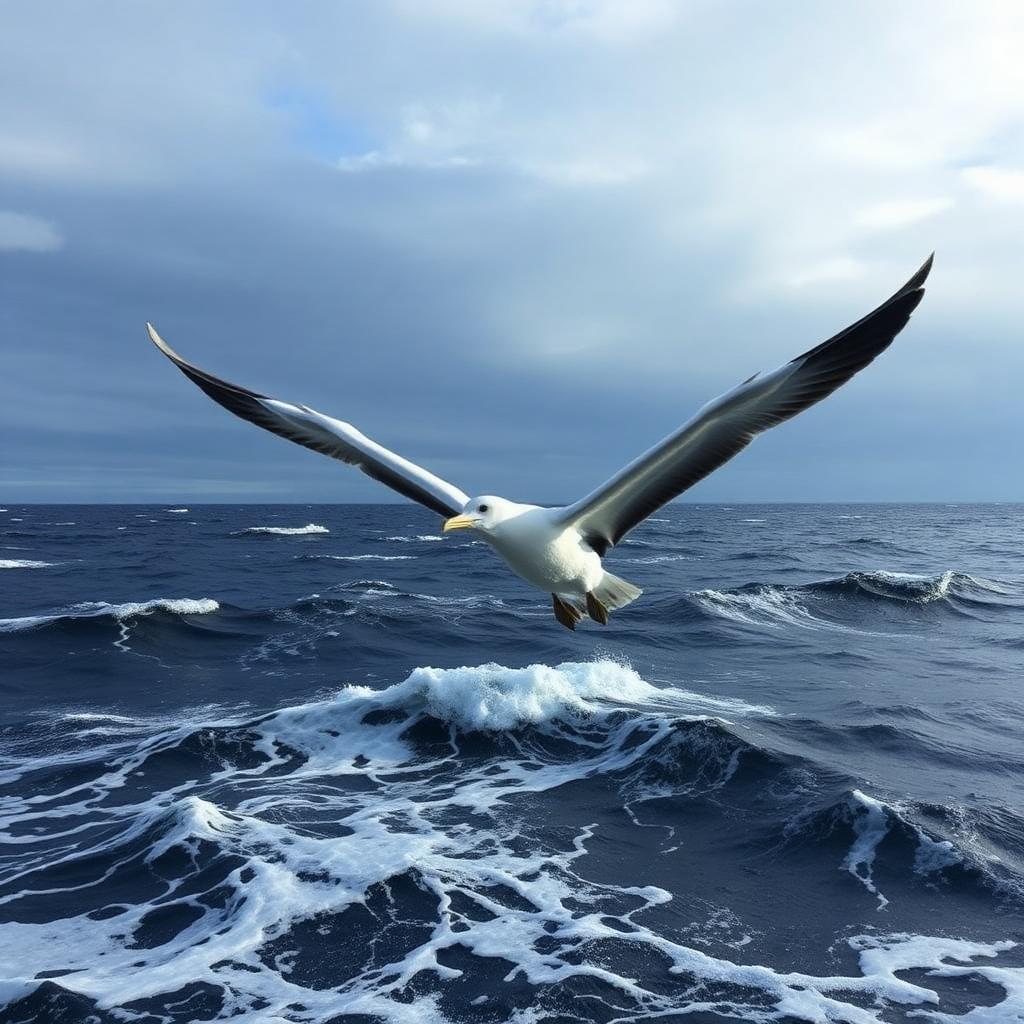
Wandering Albatross: What GPS Loggers Revealed About the World's Widest Wings
Half a century of banding paired with modern GPS reveals lifetime flight distances that dwarf any other seabird on the planet.
The polar regions remain among the least understood biomes on Earth, and wandering albatross tracking studies sits at the heart of the scientific conversation about how these frozen frontiers are changing. Researchers stationed at remote outposts, aboard icebreakers, and inside satellite operations centres compile petabytes of data every season, and the story that emerges is both fragile and astonishing. Understanding wandering albatross tracking studies is not simply an academic exercise; it informs coastal planning, fisheries policy, biodiversity protection, and the way the global public perceives climate risk.
Historically, the study of wandering albatross tracking studies was reserved for a handful of nations with the logistical capability to sustain multi-year polar deployments. That has changed rapidly. Autonomous underwater vehicles, low-orbit imaging constellations, and open data initiatives such as the World Meteorological Organization's Polar Space Task Group have democratised access to observations that once required a ship and a full winter of patience. Today, a graduate student in Nairobi can query the same sea-ice concentration dataset that guides icebreaker captains navigating the Bellingshausen Sea.
Fieldwork on wandering albatross tracking studies typically begins long before the boots hit the ice. Logistics teams model wind chill, coordinate airdrops, and rehearse crevasse rescue. Sensors are calibrated to survive temperatures below minus fifty degrees Celsius, and their firmware is patched to tolerate solar-panel dropouts during the polar night. Scientists rely on redundant instrumentation because a single mechanical failure at a remote camp can erase a season of data. This culture of engineering discipline is one reason polar science has produced some of the cleanest long-term climate records available.
Ecologically, wandering albatross tracking studies illustrates how tightly life at the poles is stitched to physical processes. Sea-ice extent controls the timing of algal blooms, which in turn feeds krill, which anchors the entire Southern Ocean food web from silverfish to blue whales. In the Arctic, the retreat of multi-year ice reshapes hunting grounds for ringed seals and polar bears while opening new corridors for boreal species that historically stopped at the tree line. Every ecological question at the poles quickly becomes a question about ice.
The climate signal in wandering albatross tracking studies is unambiguous. Both poles are warming faster than the global mean, with the Arctic accelerating at nearly four times the planetary rate over the past four decades. Antarctic sea ice, long considered stable, set consecutive record lows between 2023 and 2025. Ice cores drilled at Dome C and WAIS Divide show that current atmospheric concentrations of carbon dioxide exceed anything measured in at least the last 800,000 years, giving today's changes a geological signature.
Human communities are entwined with wandering albatross tracking studies in ways that outsiders often underestimate. Indigenous peoples of the Arctic, including the Inuit, Sámi, and Chukchi, have documented environmental change through oral tradition long before satellite records existed. Their observations of thinning ice, altered caribou migrations, and unfamiliar insect species now feed formal co-production of knowledge programmes with academic institutions. In Antarctica, where no permanent civilian settlements exist, the human presence is entirely scientific and diplomatic, governed by the 1959 Antarctic Treaty System.
Conservation strategies related to wandering albatross tracking studies increasingly rely on international cooperation. The Convention on the Conservation of Antarctic Marine Living Resources, the Arctic Council working groups, and the Agreement on the Conservation of Polar Bears each provide frameworks that member states adapt to national law. Marine protected areas around the Ross Sea and the South Orkney Islands are the largest of their kind on the planet, and negotiations continue over additional reserves in the Weddell Sea and East Antarctica. Enforcement remains challenging, but transparency has improved with satellite vessel tracking.
Looking ahead, the trajectory of wandering albatross tracking studies depends on decisions taken far from the ice. Emissions pathways compatible with a 1.5 degree Celsius warming limit would slow but not halt polar amplification; overshoot scenarios trigger nonlinear responses in ice-sheet dynamics that models are only beginning to resolve. What is not in doubt is that the poles are early warning systems. Whatever we measure at the margins of the cryosphere today, we will feel in coastal cities, agricultural belts, and mid-latitude weather patterns tomorrow.
Further reading on wandering albatross tracking studies is unusually accessible for a scientific discipline. Peer-reviewed journals such as The Cryosphere, Polar Biology, and Journal of Glaciology publish open-access work every month, and national programmes including the British Antarctic Survey, the Alfred Wegener Institute, and the United States Antarctic Program maintain public data portals with well-documented archives. For a general audience, the Scientific Committee on Antarctic Research produces plain-language briefings that translate current findings without oversimplifying them, and the Arctic Monitoring and Assessment Programme releases regular state-of-the-Arctic reports that remain the single best synthesis available for the northern polar region.
For readers new to wandering albatross tracking studies, the most useful habit is to follow the primary literature and the field notebooks of active researchers rather than headlines optimised for outrage. Polar science rewards patience. A tide gauge in Svalbard, a snow-pit measurement in Dronning Maud Land, or a decade-long tag return from a bowhead whale each contribute a single, essential thread. Woven together, they form the most honest portrait we have of a planet in transition, and they remind us that the ice is not a distant abstraction but a living archive of our shared future.