The Emperor Penguin Breeding Cycle Is a Timing Problem
Why egg care, parental exchange and sea-ice persistence must be understood together.
A sequence, not a single heroic fast
Emperor penguins breed in the Antarctic cold season. The male incubates the egg on his feet beneath a fold of skin while the female feeds at sea. Successful breeding depends on a sequence of events: laying, incubation, the return of a feeding parent and continued provisioning of the chick.
The familiar image of a male guarding an egg captures one part of that sequence. It cannot explain the entire reproductive challenge without the parents' alternating roles and the changing requirements of the growing chick.
Why a stable platform still has to be near food
Breeding sites commonly depend on sea ice that remains usable long enough for chicks to develop. Ice provides a platform, while the ocean supplies food. Distance and access between the two affect the work required of adults. More ice is therefore not automatically better in every local circumstance, just as early breakup is not merely a change in the scenery.
The useful question is whether platform stability, access to feeding areas and the timing of development remain compatible. A breeding outcome is produced by their interaction; a single regional ice-extent number cannot describe all three.
What a colony observation can establish
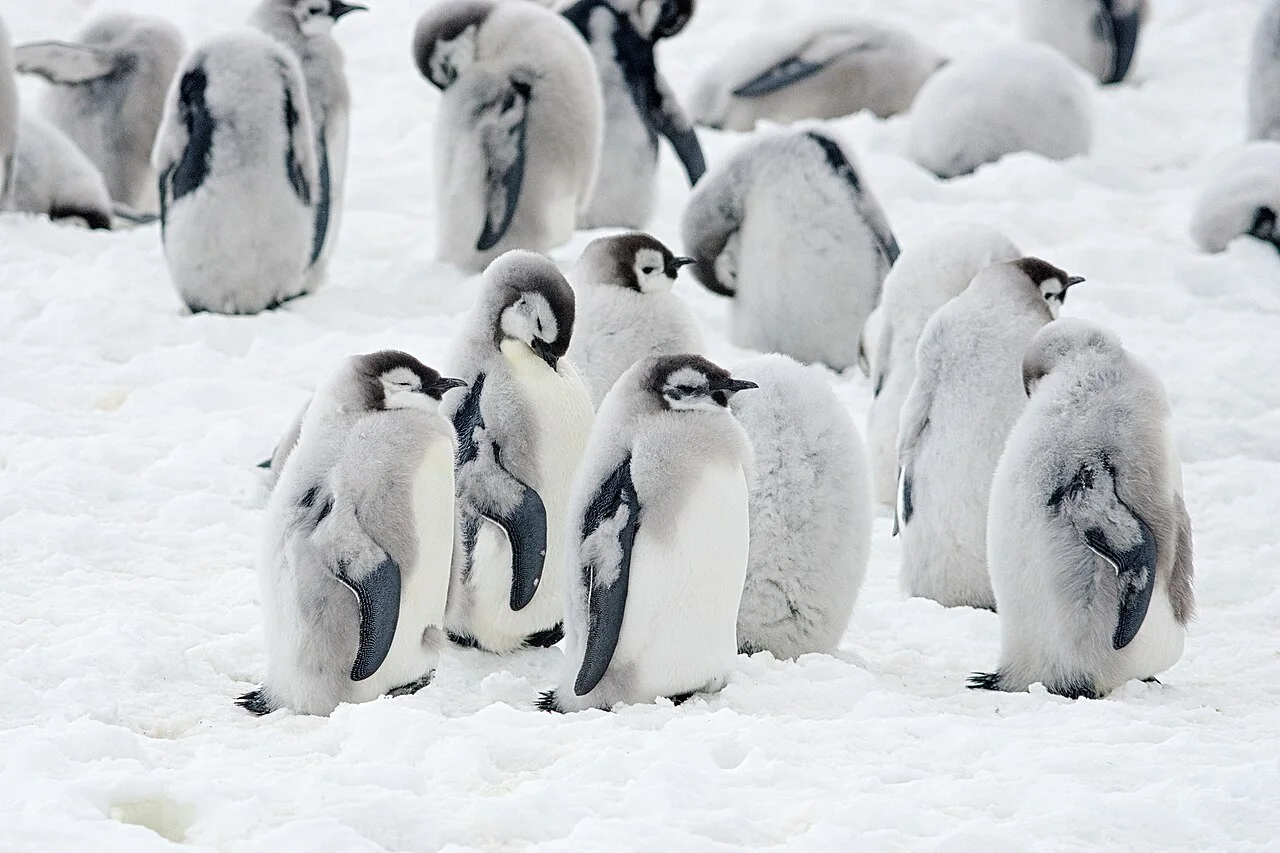
A photograph can record adults, chicks and visible grouping at a particular place and time. It cannot, without a defined survey method, establish the colony's breeding success or a trend in the species as a whole. Even an apparent count needs a date, area and a way to account for animals not visible in the frame.
When reading a breeding report, look for the number of sites studied, the breeding season and whether the result concerns eggs, chicks or fledged young. Those distinctions preserve the scale of the evidence. They also keep an affecting wildlife story from turning into an unsupported claim about every colony.
Read the Australian program's breeding account as a relay
Open the Australian Antarctic Program's emperor penguin profile and read the breeding section alongside its feeding account. The male's egg care and the female's return are successive parts of one process. Put the parental roles on a timeline, then add the chick's later requirements. That arrangement answers why an account focused entirely on enduring winter leaves the reader without a complete explanation of reproduction.
Now attach the habitat question to each stage rather than adding one annual Antarctic ice total above the whole timeline. The relevant platform and access to food need to remain compatible with the work being done at that stage. This is a conceptual relay, not a dated calendar for every colony. A colony-specific study is needed to fill in local dates and outcomes. The timeline helps the reader understand which missing stage a particular report actually investigates.
What a sea-ice platform provides
A breeding platform must remain usable for the relevant stages of development. It is also positioned in relation to feeding access. Thinking about both properties explains why the question is not simply whether there is more or less ice somewhere in Antarctica. The arrangement and timing of ice around a colony can matter in ways that a continent-wide total cannot capture.
Imagine two fictional seasons with the same broad regional ice extent. In one, the local platform persists through the required period; in the other, the local configuration changes earlier. The regional total alone would miss the difference relevant to the colony. This is not a claim about any measured season. It is a demonstration of why ecological interpretation needs the place and life stage attached to the environmental measurement.
Distinguish an egg, a chick and a fledged young bird
A report counting incubating adults, visible chicks or young birds reaching a later stage is not necessarily measuring the same outcome. The word success needs an operational definition. An image showing many chicks can be encouraging while leaving their eventual fate unknown. Similarly, a count early in the season should not be compared directly with a later-stage count without explaining what each includes.
Ask how the study identified its stages, when observations occurred and whether the sampling covered the same sites in each comparison. These details make a result interpretable rather than merely technical. They can explain why two reports appear different without either being inaccurate. For a general reader, the best summary says what was counted and when before presenting a broad assessment of the breeding season.
Understand huddling without treating the colony as one organism
Grouping can change the conditions experienced by individuals, and emperor penguins are well known for dense huddles. However, a photograph of a huddle records a configuration at one time. It does not measure the temperature experienced by every bird or show every movement within the group. Claims about thermal benefit need the observations or research that established them.
A useful description separates what the image displays from what scientific work explains. The image might show closely packed adults; the source may explain how grouping affects heat loss. Combining them responsibly makes the mechanism accessible while retaining the distinction between illustration and measurement. There is no need to invent an exact temperature or portray every individual as occupying a permanently comfortable position.
How to use a colony story without disturbing its subject
A reader planning a visit should follow current wildlife rules and the instructions of authorized operators rather than use an article's photograph as a model for approach distance. The image may have been obtained under circumstances not available to a visitor. The appearance of calm birds is not permission to reduce separation or interrupt their routes.
For education, compare this breeding-cycle explanation with the companion photograph guide. One asks how the reproductive sequence fits the habitat; the other asks what an image can establish. Together they allow a more precise conclusion: emperor penguin breeding depends on a sequence of parental work and environmental conditions, and claims about a particular season require observations matched to that sequence.
Make a breeding report legible
A concise evidence table can identify the colony, season, observation method, life stage counted and outcome assessed. Use a separate column for the environmental information offered as an explanation. This arrangement makes it obvious whether the report measured both the breeding result and its proposed cause or inferred a connection using additional studies.
For a student or general reader, that distinction is the useful learning outcome. The animal's unusual breeding schedule becomes understandable as a sequence of requirements, and a particular report becomes a set of evidence-backed claims rather than a universal story about every emperor penguin.