What Can a Narwhal Tusk Tell Us About Its Function?
Separate anatomical evidence, observed behavior and hypotheses about a remarkable tooth.
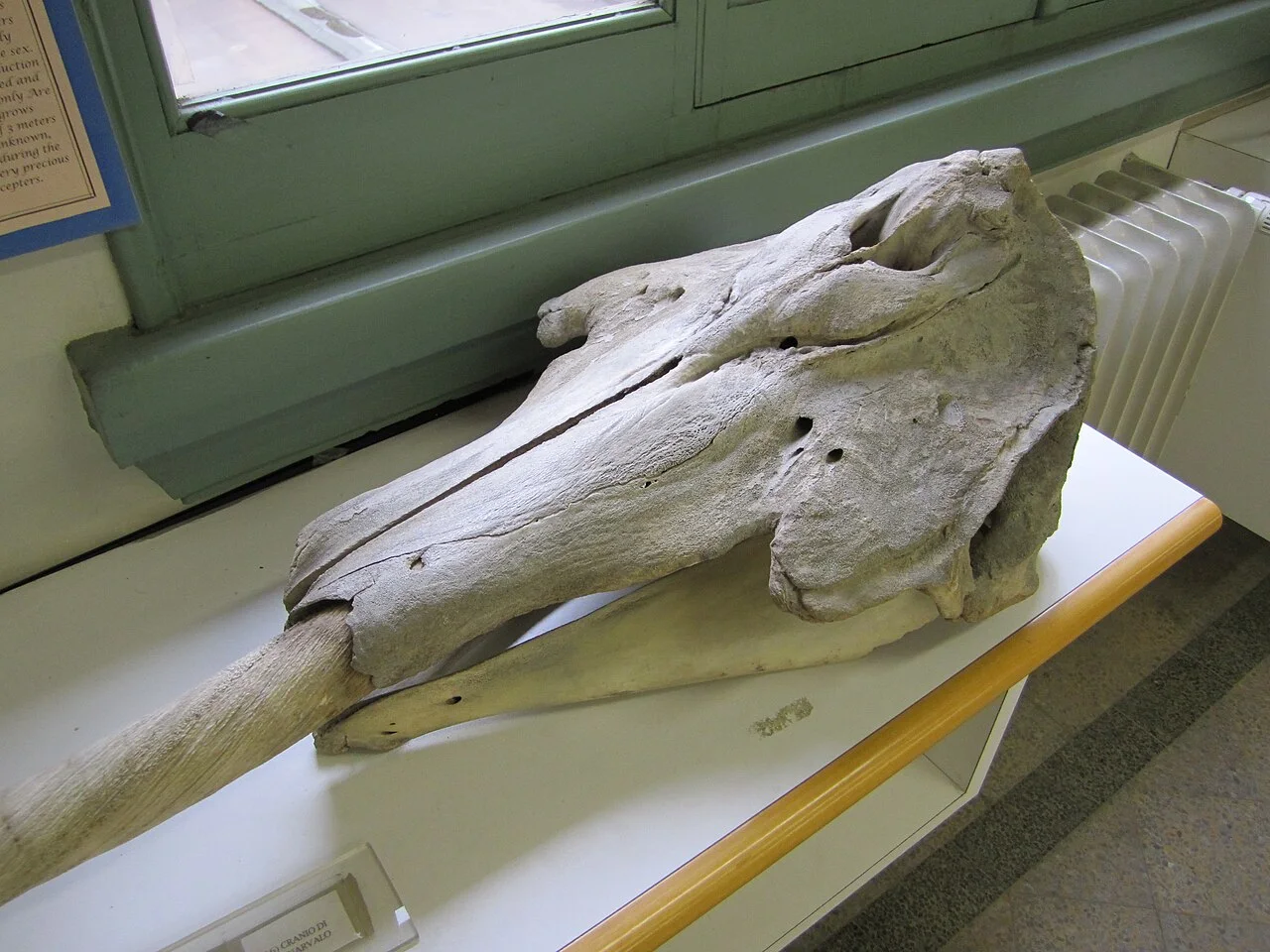
Begin with the tooth
A narwhal tusk is an elongated tooth, usually associated with males. Calling it a horn hides its anatomical origin. Describing the tissue, nerve supply or external surface can tell researchers about what the structure might be capable of, but anatomical possibility is not the same as demonstrating its main function in the wild.
This is the central distinction missing from many tusk headlines: a structure can have more than one role, and identifying a plausible sensory capacity does not automatically disprove every social or competitive role.
Three kinds of evidence
Anatomy asks what the tusk is made of and how it connects to the animal. Behavioral observation asks what animals actually do with it. Comparative evidence asks how the structure varies among individuals and how that variation relates to age, sex or other traits. A convincing explanation should make clear which of these it uses.
For example, observing contact between tusks establishes contact. It does not, without further evidence, establish every participant's intention or the evolutionary history of the behavior. Conversely, a laboratory measurement may reveal a mechanism without measuring its frequency or importance in natural conditions.
A better way to read a discovery headline
Ask whether the new result supports a capability, a use or a dominant evolutionary explanation. Then check the number of animals, setting and alternatives considered. Phrases such as proves its purpose often compress these distinct questions into an answer the study did not claim.
This article does not report a new tissue study or resolve all tusk hypotheses. It provides a framework for reading them. Species profiles establish the biological context; any particular discovery should be traced to the original study and its actual methods before being described as overturning a century of knowledge.
Separate NOAA's anatomical description from its functional account
NOAA's narwhal profile explains the tusk's origin in the upper jaw and notes exceptions to the familiar image of a single-tusked male. Use that description to answer the basic question first: this is a tooth, not a horn. An unusual individual does not invalidate the general pattern, and the general pattern does not justify claiming that every animal has the same configuration.
Next read the source's functional discussion as a different part of the account. Anatomy, social roles and possible sensing uses are not interchangeable observations. If another article announces a new purpose, ask which of those questions its evidence addresses. This source-reading exercise supplies a firm anatomical starting point and a method for handling functional claims. It does not require pretending that one photograph or a tissue property independently explains the structure's entire evolutionary history.
A video needs context before it becomes an explanation
An observed use of a tusk can demonstrate that a behavior occurred during the recorded event. Before extending the finding, check whether the recording identifies the animals, setting, sequence and relevant objects. A short edited clip might omit what preceded or followed the contact. That missing context can matter when deciding whether the footage supports a proposed behavioral interpretation.
Next distinguish occurrence from frequency. An unusual event can be scientifically interesting without being the usual use of a structure. To estimate frequency, researchers need an observation process that can record relevant events and non-events. An article should celebrate a well-documented observation while keeping the size of its claim proportional to its coverage. No invented dialogue or human intention is needed to make the event interesting.
Comparison can test an explanation, but correlation needs care
Comparative research might examine how a trait varies among individuals and whether that variation relates to other characteristics. To read such a result, identify the sample, measurements and alternative explanations considered. A relationship between two measured features can support an argument, but the relationship alone does not describe every causal step that produced it.
A useful article explains why the comparison was chosen. If a hypothesis predicts a pattern, ask whether the observation matches that prediction and whether competing hypotheses could also produce it. The answer may strengthen a case without resolving every uncertainty. This is more informative than presenting any statistically reported relationship as proof that all other functions have been disproved.
Build a claim ladder for a discovery story
Place the article's statements on a ladder from direct description to wider explanation. The first rung might identify the tusk as a tooth. Another might describe a measured property. Higher rungs could concern an observed use, its importance in ordinary life and an evolutionary explanation. Moving upward generally requires additional kinds of evidence, not just more enthusiastic wording about the same measurement.
Now locate the actual study on that ladder. If its methods address tissue properties, a conclusion about an entire social system needs other support. If its methods document behavior, a claim about anatomical mechanism may need different work. This exercise is useful for students because it shows that scientific caution is often about matching a question to a method rather than withholding an explanation for its own sake.
What to retain after reading competing accounts
Make a small comparison with columns for the proposed role, evidence type, study setting and stated limitation. Do not treat the number of articles repeating a claim as the number of independent studies behind it. Several reports may all refer to the same observation. Trace their links until you can distinguish a new result from commentary on an existing one.
The practical conclusion is deliberately precise: the narwhal's tusk is a remarkable tooth whose properties and uses can be investigated through several methods. A reader can understand a new finding without pretending that one experiment explains every aspect of the structure. When a source leaves a function unresolved, preserving that uncertainty is part of an accurate explanation, not a gap to fill with speculation.
Rewrite a claim at the right level
Consider the fictional headline scientists prove the tusk's only purpose. If the underlying work measured a tissue response, a more accurate summary would identify that response and the tested conditions. If it documented a behavior, describe the behavior and the observation sample. Neither rewrite needs to dismiss the result; it replaces an unsupported universal conclusion with the actual discovery.
This editing exercise also exposes a useful missing question: what additional evidence would connect the result to ordinary life? That question can guide further reading. It is more informative than choosing between total certainty and total ignorance, because a well-supported partial explanation still advances understanding of the animal.