A Greenland Fjord Image: Read Light Separately From Ice Change
Why the shape and color in one frame cannot establish a glacier's trend.
A scene contains several clocks
Light changes over minutes and hours; icebergs can drift and rotate; a glacier's position changes over other intervals. A single attractive fjord photograph captures these processes together but cannot measure all of them. The first task is to separate the appearance of the scene from the environmental change being claimed.
The source credit identifies the reference photograph and its creator. This page does not describe a Polar Nature voyage to Scoresby Sund or imply that a picture from another year records today's conditions.
Color is not a date stamp
Blue-looking ice, reflections and warm light can make a fjord visually striking. Their appearance depends on illumination, the ice, the water, the atmosphere and the recording process. A color difference between two online photographs is not, by itself, evidence that a glacier became younger, older or healthier.
Likewise, an iceberg in front of a glacier does not show exactly when or where it detached. Connecting it to a specific calving event requires observations that follow the event or otherwise establish the link.
What makes a comparison useful?
For a position comparison, use dates, compatible viewpoints, recognizable reference features and an appropriate scale. For an ice-sheet mass question, consult a defined mass-balance product rather than trying to estimate a whole budget from the foreground of a photograph.
A good visual account can combine beauty with evidence by making its limits explicit. Describe the light and visible forms as observations; attach any trend statement to a time series or study. That division lets a reader enjoy the scene without confusing atmosphere in the artistic sense with a scientific measurement.
Separate the foreground from the glacier measurement
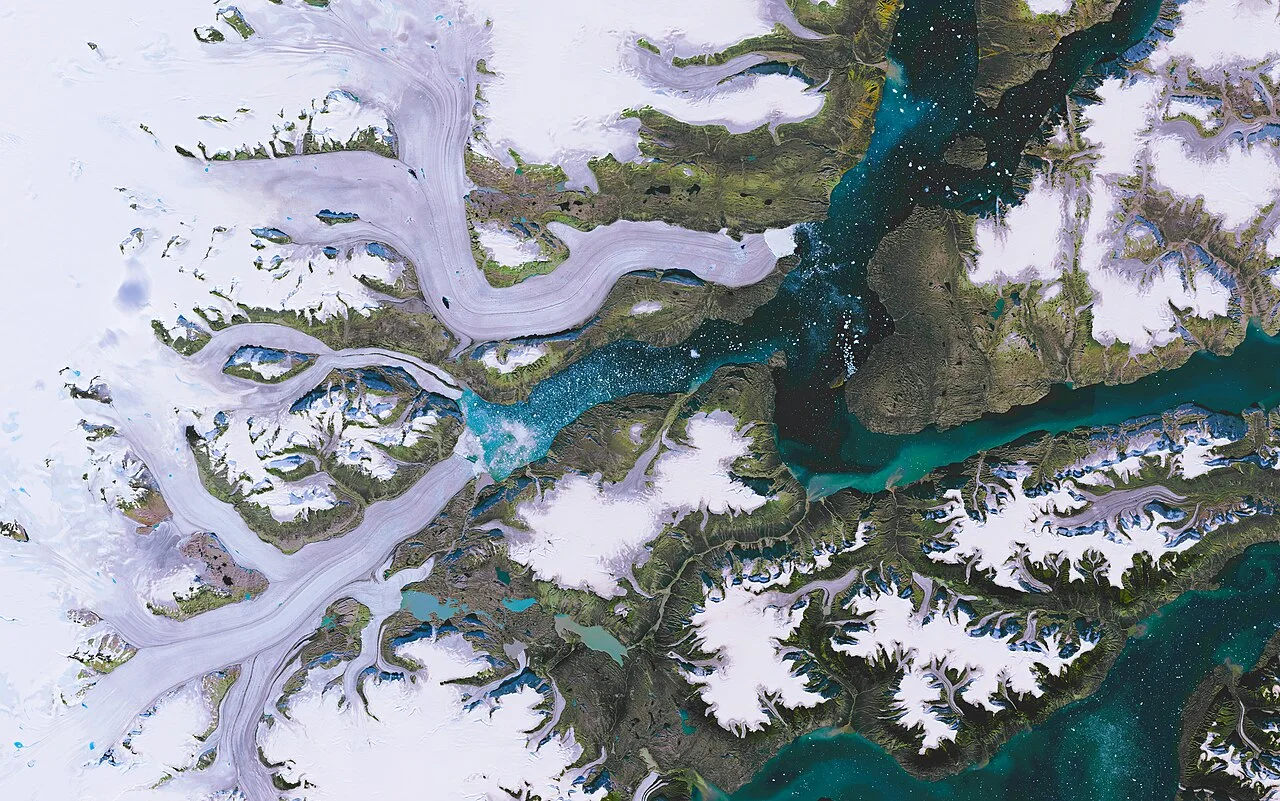
A fjord scene can include water, drifting ice, a glacier margin, mountains and sky. Before interpreting change, identify which feature the claim concerns. Foreground iceberg movement does not directly measure the glacier's terminus, and a change in the visible water surface does not determine the ice sheet's mass balance. The scene contains several systems within the same attractive frame.
A useful annotation labels each feature without assigning an unsupported history. Mark the visible margin, recognizable fixed landscape features and any ice whose position is merely observed at that moment. The exercise turns a scenic photograph into a clearer observation while preserving the distinction between description and measurement. It also reveals whether the feature needed for a proposed comparison is actually visible.
Use the Scoresby Sund cover to separate scene and measurement
The credited image is identified as glaciers of Scoresby Sund, Greenland. Begin with that setting, then separate landscape references from ice and water in the frame. A mountain feature can help orient a comparison; a foreground floating object may have moved. This simple distinction determines whether the object used as a reference is suitable for a position argument.
Next ask what a second image would have to add. For glacier position, it needs a date and geometry that allow the boundary to be compared. For light, different illumination may be the subject rather than a confounding factor. For total ice-sheet change, a fjord photograph is not the required budget product. NSIDC's glacier explanation supplies process context, while the original image record supplies visual provenance. Keeping those roles separate allows readers to understand the actual scene without inventing a calving event or deriving a climate trend from its color.
Light changes the appearance without moving the ice
Sun angle, cloud and reflected light can alter the visible contrast of a scene over short intervals. Shadow may hide a boundary that becomes clearer in another frame. A warm color cast can change the impression of ice without establishing a change in its age or condition. Read recording choices and illumination separately from the environmental claim.
This helps explain why two honest photographs can appear very different. The difference may be part of the artistic record rather than a measured trend. An informative caption identifies the light as an observation and reserves a statement about ice change for appropriate evidence. Beauty and accuracy work together when each claim is attached to the information that can support it.
An iceberg's presence does not date its departure
An iceberg visible in a fjord has a history before the exposure, but the frame may not reveal it. Associating it with a particular calving event requires a documented sequence or other evidence connecting the observations. Proximity to a glacier is context, not an exact departure timestamp. Avoid assigning a precise origin simply because the visual arrangement suggests a convenient story.
The same limit applies to motion. A single position does not establish speed or direction. Repeated dated observations can contribute to those questions if identification and method are appropriate. Keep any calculated movement separate from the glacier's own position change. The two can be related within a fjord system without being interchangeable measures of the same process.
Surface mass balance asks another question
The Greenland surface-condition information linked here concerns a defined part of the ice-sheet budget. It should not be described as a direct reading from the fjord photograph. The page's variables and accounting boundary matter. A surface process and ice discharge into the ocean contribute to different parts of a broader mass-balance discussion.
For a useful reading note, write the dataset's variable and period beside the visual observation rather than forcing them into one number. A photograph can locate the setting while the dataset describes its own measured or modeled quantity. This allows readers to connect local scenery with larger processes without pretending that one frame observes the entire ice sheet.
A caption can preserve several timescales
Describe the light and visible forms first. Give the source date and place when available, then identify any separate study used for a trend statement. If the image is historical or illustrative, retain that status. Do not call an image current merely because it appears in a newly updated article. The image date and article revision date have different meanings.
The reader should leave able to enjoy the fjord and ask a precise question of its evidence. What changed: illumination, a drifting object, a glacier boundary or an ice-sheet budget? Over what interval and by what method? Those distinctions make a visual account useful beyond its mood, while allowing the photograph to remain an honest record of a particular scene.
Check the fixed reference
A mountain edge can help orient a comparison, while a floating iceberg cannot be assumed fixed between dates. Identify which references are stable enough for the method before interpreting displacement. This simple distinction prevents a moving foreground from becoming the ruler for a glacier-position claim.