Permafrost Thaw and Buildings: Why Ground Ice Changes the Risk
Understand settlement, the active layer and why thaw does not produce identical damage at every site.
Frozen ground is not one material
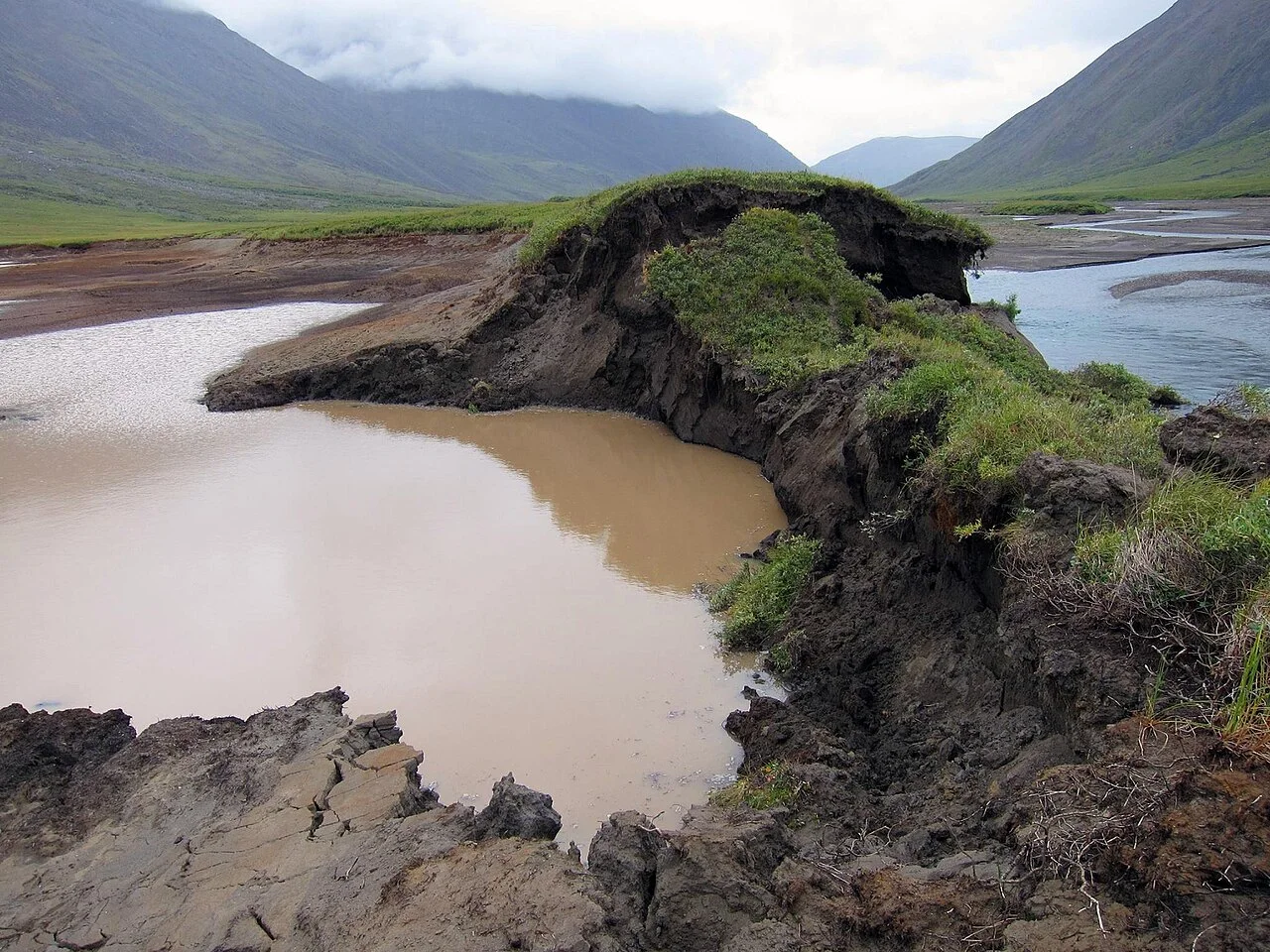
Permafrost is ground that remains at or below freezing for at least two consecutive years. It can include rock, soil and varying amounts of ice. The seasonally thawing layer above it is called the active layer. These definitions describe temperature and seasonal behavior; they do not tell you how much load a particular site can support.
The important engineering distinction is between ground with little excess ice and ground whose structure depends heavily on ice. When excess ice melts, water can drain or redistribute and the surface may settle. Two nearby locations can therefore respond differently to similar weather.
Why a building needs a site-specific explanation
Heat can move into the ground from both the atmosphere and infrastructure. Drainage changes can redistribute water and heat, while snow cover can alter winter insulation. A crack in a wall is an observation, not a complete diagnosis of which process caused it.
For a report about Svalbard, readers should ask for the building location, ground investigation, timing and responsible authority's assessment. A regional warming trend cannot identify the cause of damage at an individual foundation. Our earlier account of an emergency review following a specific warm spring was not supported by a verifiable report and has been withdrawn.
Read a risk report in layers
First separate exposure from failure: a building can sit on thaw-sensitive terrain without already being damaged. Next distinguish monitoring from prediction: temperature measurements establish local conditions, while a projection depends on assumptions about heat, water and future climate. Finally check whether the proposed response concerns foundations, drainage, maintenance or relocation.
This framework helps a general reader understand why an engineer's investigation can be more informative than an alarming photograph. It is not a foundation-design guide or a safety assessment of any Svalbard building. Owners and visitors should follow current local professional advice and official access restrictions.
Use NSIDC's thaw definition to understand the building question
NSIDC distinguishes ground thaw from the melting of a solid block of ice: thawed soil can remain solid material. Apply that definition to a foundation story. The relevant question is not simply whether the ground became warmer, but how the material supporting the structure changed. Where ground ice contributes to its volume and structure, its loss can matter differently from thaw in material with little ice.
Draw temperature, material and movement as separate observations. A weather record addresses the first; a ground investigation addresses the second; measurements of the structure or surface address the third. This framework explains why a regional trend is important context but cannot identify the cause of damage at a named Svalbard building. It gives readers a useful way to understand an engineering report without presenting this article as a foundation assessment or inventing an emergency event.
Distinguish a seasonal observation from a lasting change
A surface can move during seasonal freezing and thawing without every movement indicating the same long-term mechanism. An investigation therefore needs measurements over an appropriate period and a clear reference. A photograph taken in one season may record a real change while leaving its reversibility, rate and cause unresolved. A single warm month is context, not a complete explanation of every structural symptom.
Ground-temperature observations also have a depth. A reading near the surface and one deeper below it describe different parts of the thermal system. If a report says the ground is warming, ask where, over which interval and relative to which baseline. Treating the ground as one uniform temperature can hide the very information needed to understand a foundation concern. Good reporting explains these distinctions without pretending that readers can diagnose a building from a graph.
A better way to read a building-damage photograph
Start by recording what is directly visible: a crack, a tilted element, a displaced surface or a repaired joint. Then separate the proposed cause. Has a qualified investigation linked the symptom to thaw-sensitive material? Were drainage, construction history and other possible mechanisms considered? The photograph can establish the appearance of damage, but it cannot answer those questions by itself.
Dates make the sequence more informative. A record showing when a symptom appeared, how it progressed and what measurements accompanied it is stronger than an undated comparison with a dramatic caption. Repairs should also be described accurately. Work to a building is not proof that every site nearby faces the same problem, and the absence of visible repair is not proof of safety. Site-specific information remains essential.
Turn the explanation into a useful reading checklist
When reading a report, identify the ground material, excess-ice evidence, thermal measurements, movement observations and the responsible professional assessment. Ask whether the proposed response addresses the diagnosed process. A drainage measure, a foundation intervention and a planning decision are not equivalent solutions, even if all appear under the broad label adaptation. The article should explain the purpose of the response without offering an unqualified design recommendation.
For residents or visitors, the practical action is to obtain current information from the relevant local authority or responsible professional, particularly where restrictions or building concerns have been issued. This page cannot assess a specific property. What it can do is make that information easier to interpret: regional climate change explains why investigations are important, while the investigation determines what can responsibly be said about the individual site.
Use a case record instead of a before-and-after slogan
A useful hypothetical case record would include the site's ground description, the dates of observations, the depth and location of temperature sensors, the movement reference and the engineer's interpretation. Each field answers a different question. Missing one does not make all remaining information useless, but it should narrow the conclusion. For example, a surface photograph can document a visible crack without establishing the depth of the process beneath it.
Compare this with a caption that simply says warming destroyed the building. The caption jumps from a broad environmental context to an individual causal conclusion. The case record shows which evidence bridges that gap and which part remains inference. That makes it useful to residents trying to understand an assessment and to students learning how environmental processes become infrastructure risks.
An explanation should also state what would change its interpretation. New ground investigation, a longer movement record or a better understanding of drainage might alter the diagnosis. Acknowledging those possibilities is not indecision. It identifies the observations needed to improve the answer.