Crevasse Risk: Why a Rescue Plan Starts Before the Rope
An explanation of concealed glacier hazards, team preparation and the limits of online rescue advice—not a rigging tutorial.
The hidden part of the landscape
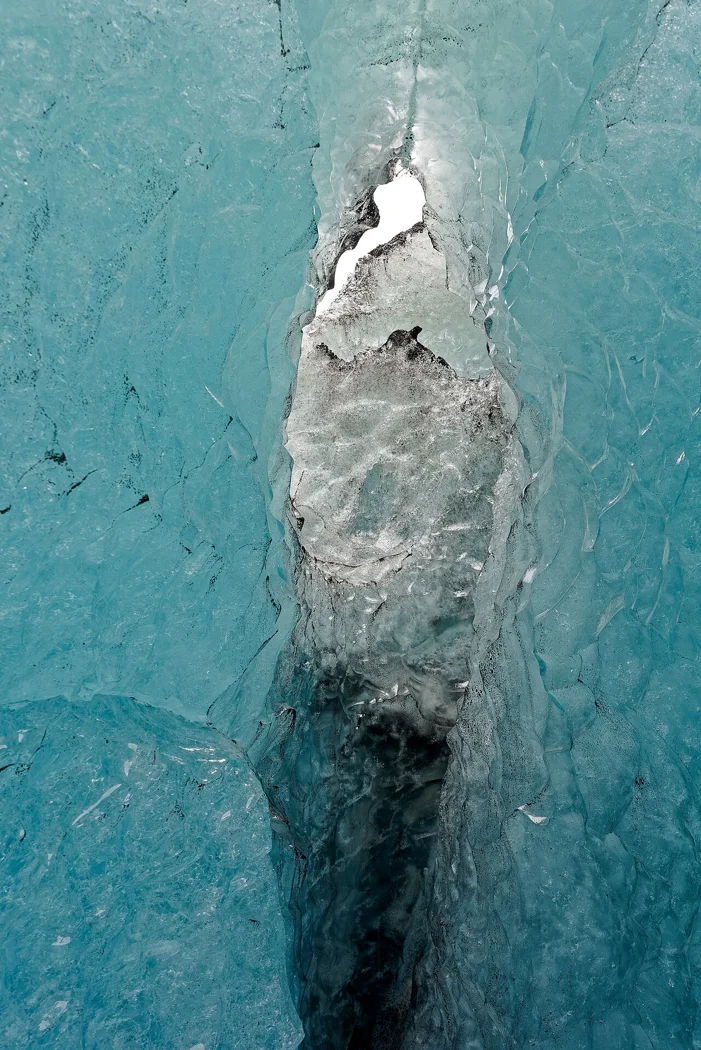
A crevasse is a fracture in glacier ice. Snow can bridge a fracture and hide its opening, so an apparently continuous white surface does not prove that the ground is continuous below it. A route described as passable on an earlier visit can change as snow, temperature and glacier movement alter local conditions.
This is why rescue preparation cannot start with the question, "Which pulley should I buy?" Equipment is only one part of a larger system: route selection, team competence, communications, weather decisions and the ability to keep an incident from escalating. A diagram cannot inspect a snow bridge or determine whether a real team's anchor is adequate.
Three plans that should exist before departure
A prevention plan explains who can assess the route, what information will be used and when the group will turn around. A response plan identifies responsibilities and the procedures the team has practiced under qualified supervision. An evacuation plan explains communications, medical support and what happens if aircraft cannot reach the site. These are planning questions, not a substitute set of rescue steps.
The USAP Participant Guide and Field Manual show how much organized preparation lies behind Antarctic field activity. Their context is trained program participants working within a support system. Copying a fragment from that system into an independent trip does not copy its training, authorization, communications network or rescue capacity.
Why a mechanical-advantage number is not a safety rating
Terms such as three-to-one describe an idealized relationship in a hauling arrangement. They do not, by themselves, establish that a setup is appropriate for the load, terrain, rope, friction or people involved. Naming a ratio without explaining these dependencies can make a short article sound far more operationally useful than it is.
For the same reason, this page does not supply anchor dimensions, rope spacing or a sequence for recovering a person. Such details require current instruction and supervised practice, including appropriate medical and incident-management preparation. They should be learned through qualified providers and the rules of the organization responsible for the activity.
Questions worth taking to a qualified instructor
Ask how the training addresses an incapacitated teammate, a rescuer who cannot approach the edge, poor visibility and a failed communications device. Ask how the team verifies its skills and how decisions change when external rescue is delayed. A meaningful answer should connect the equipment to practiced judgment rather than offer a shopping list.
For a reader staying outside glacier terrain, the practical takeaway is simpler: photographs cannot establish snow-bridge strength, a previous track is not a safety certificate, and an online guide cannot authorize travel. Use this article to understand why professional preparation matters, not as permission to attempt a crossing or a rescue.
Understand hazard, exposure and consequence separately
A crevasse is a hazard; a person's route and activity determine exposure to it. The consequences of an incident then depend on factors such as location, team capability and the availability of help. Reducing one part does not automatically control the others. Carrying communications equipment may improve the ability to report an emergency without making the original terrain less hazardous or making evacuation immediate.
Consider two fictional teams with identical equipment. One has current route information, practiced responsibilities and a clear decision process. The other has bought the same items but has not rehearsed using them together. Their inventories look alike, yet their preparations are materially different. This is why a meaningful assessment asks what a team can actually do, not just what appears on its packing list.
Read the field manual as a planning document, not a knot tutorial
The USAP Peninsula Field Manual is prepared for a particular organized field program. Its context includes risk assessment, communication, equipment and personnel rather than a rope technique in isolation. Use that structure to evaluate an expedition story: which organization assessed the work, who held relevant skills and what arrangements supported the team? These are capability questions, not instructions for attempting a rescue.
Consider a fictional equipment list containing every named item but no assigned roles or verified compatibility. The list establishes possession, while the ability to use the combination remains unproven. A planning review must address that gap through qualified instruction and the responsible program. This gives readers a useful answer to whether buying rescue equipment is enough: it is one input, not a complete system. This article intentionally does not provide a hauling sequence, route clearance or online certification of readiness.
Evaluate an online rescue demonstration critically
A short demonstration may use convenient ground, a cooperative participant and an instructor who can interrupt the exercise. Those conditions can be appropriate for teaching a specific skill, but the recording should not be mistaken for validation under every field condition. Ask what the exercise demonstrates and what it deliberately leaves out. A successful haul in one controlled setup is evidence about that setup, not universal proof of a system's suitability.
Pay attention to whether the explanation acknowledges the team's wider tasks. Protecting other people, assessing an injured person, communicating clearly and managing cold or fatigue are not decorative additions to the rope work. A demonstration that omits them may still teach one narrow concept, but it should be presented as narrow. The viewer should not be left thinking that memorizing a diagram completes preparation.
A useful outcome for readers who are not expedition leaders
You do not need to learn rescue rigging to use this article. If you are evaluating a proposed guided activity, request information about the operator's qualifications, scope, current procedures and contingency arrangements. Ask which activities are actually included and who makes the decision when conditions change. Answers should be specific enough to understand, while avoiding promises that no operator can responsibly make.
If you are reading an expedition account for education, look for the difference between a description of an event and advice to imitate it. A writer can explain why a route was difficult without issuing instructions for repeating it. The best result of this page is a more accurate understanding of preparation and responsibility: equipment supports a practiced system, and an online explanation cannot certify that the system is present.
Keep responsibility visible
A good plan identifies who has the competence and authority to make decisions, rather than distributing responsibility so vaguely that everyone assumes someone else has checked. That principle applies before an incident as well as during one. A reader assessing a trip should be able to understand the responsible organization and the limits of the service being offered.